Introduction
Combining kratom and Tramadol is one of the more controversial topics in the kratom community. Some users seek this combination for enhanced pain relief or synergistic effects, while health experts urge caution. Understanding what each substance does, how they interact, and the real risks involved is essential before considering this combination.
What Is Tramadol?
Tramadol is a prescription opioid medication used to treat moderate to severe pain — including postoperative pain, cancer-related pain, nerve pain, and chronic conditions. It works by inhibiting the reuptake of serotonin and norepinephrine while also acting on opioid receptors to suppress pain signals. Its effects peak around 4 hours after consumption, and it is considered a weaker opioid with theoretically lower abuse potential than morphine — though this assessment can be misleading.
Tramadol is available in syrups, powders, injections, capsules, and elixirs, and should always be taken as prescribed. Its abuse and misuse are well-documented in medical literature.
Origin and Nature of Kratom
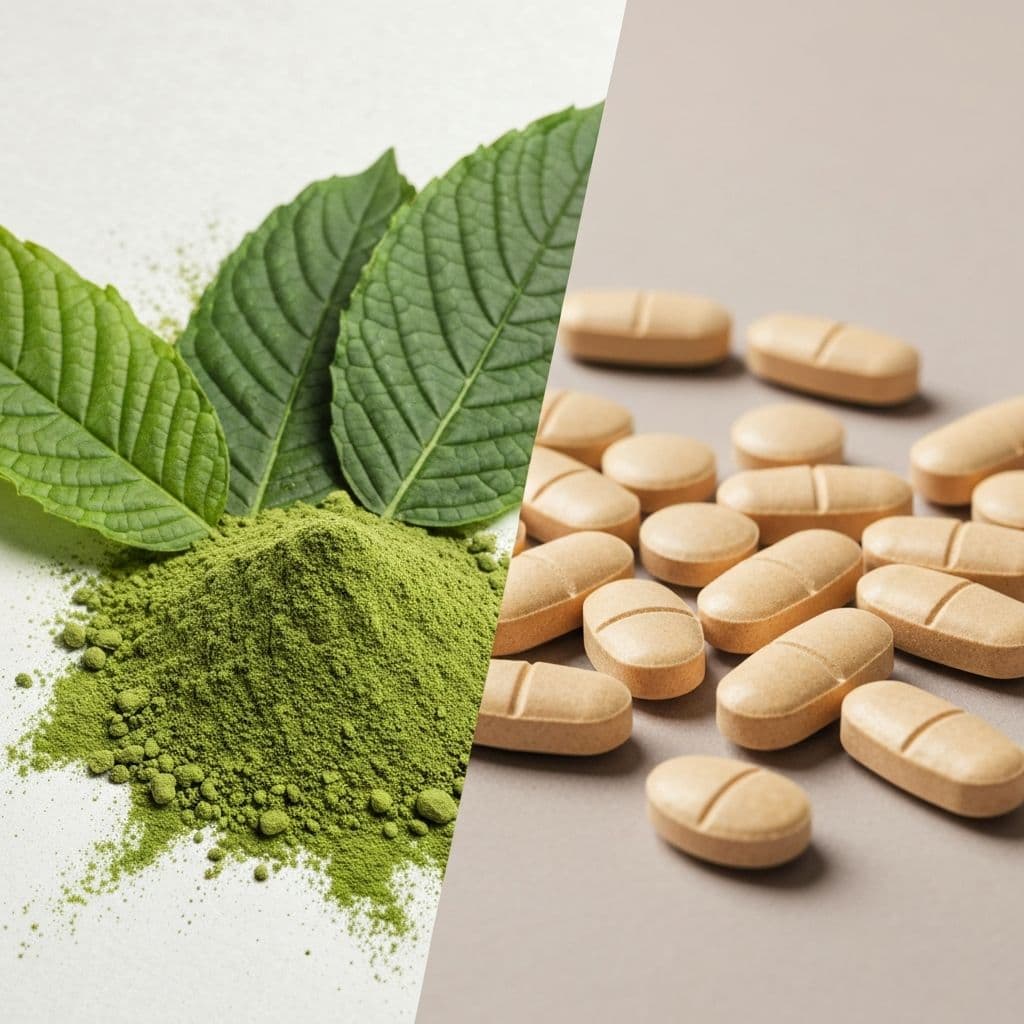
Kratom (Mitragyna speciosa) originates from the humid river banks and forests of Southeast Asia — particularly Malaysia, Indonesia, and Thailand. It is an entirely natural herb harvested by indigenous farmers and processed into consumable forms. Its active alkaloids interact with opioid receptors to produce pain relief, stimulation, mood enhancement, and, at higher doses, sedation.
Dosage Guidelines
Kratom Dosage
- Beginner (under 2mg/day) — Gentle stimulating effect; allows the body to acclimate
- Regular user (5–7mg/day) — Standard effective dose for experienced users
- Overdose threshold (8mg+) — Risk of adverse effects; avoid exceeding this
Tramadol Dosage
- Initial dose — 50mg for moderate to severe pain
- Maximum daily dose — 400mg, divided into intervals of 50–100mg each
- Critical rule — Never suddenly increase dose; titrate gradually under medical supervision
Combining Kratom and Tramadol: The Risks
Both kratom and Tramadol act on overlapping opioid receptor pathways and serotonergic systems. Combining them amplifies effects on both systems — which can rapidly escalate from beneficial to dangerous:
- Both compounds together are highly addictive and habit-forming
- The combination can cause serotonin syndrome — a potentially life-threatening condition
- Risk of seizures is significantly elevated when both are combined
- Respiratory depression is a serious concern, particularly at higher doses of either substance
If You Must Use Both: Key Precautions
- Allow a minimum 4-hour gap between Tramadol and kratom consumption
- Never combine if you consume alcohol or are taking sedatives
- Never crush Tramadol tablets — take them whole as designed
- Do not use this combination regularly — both substances have habit-forming potential that compounds when combined
- Consult your physician and disclose both substances before any medical treatment
Tramadol Abuse
As a controlled substance, Tramadol carries real addiction risk when taken regularly without therapeutic breaks. Tramadol abuse disorder is well-documented and should be taken seriously — particularly when combining it with another substance that also acts on opioid receptors.
Conclusion
The combination of kratom and Tramadol carries significant risks that should not be taken lightly. If pain management is your goal, this combination should only be approached — if at all — under close medical supervision with full transparency to your healthcare provider. For most users, the risks outweigh any perceived benefits of combining these two substances.