The Quality Problem in the CBD Market
A 2017 study published in the Journal of the American Medical Association analyzed 84 CBD products purchased online and found that nearly 70% were mislabeled — 43% contained more CBD than labeled, and 26% contained less. More concerning, 21% contained detectable THC despite being labeled as THC-free.
This was before the market exploded to its current scale. The quality problem has not gotten better. Without robust FDA oversight of the supplement sector, consumers bear the responsibility of vetting products themselves. This guide gives you the tools to do so effectively.
The Non-Negotiable: Third-Party Certificate of Analysis
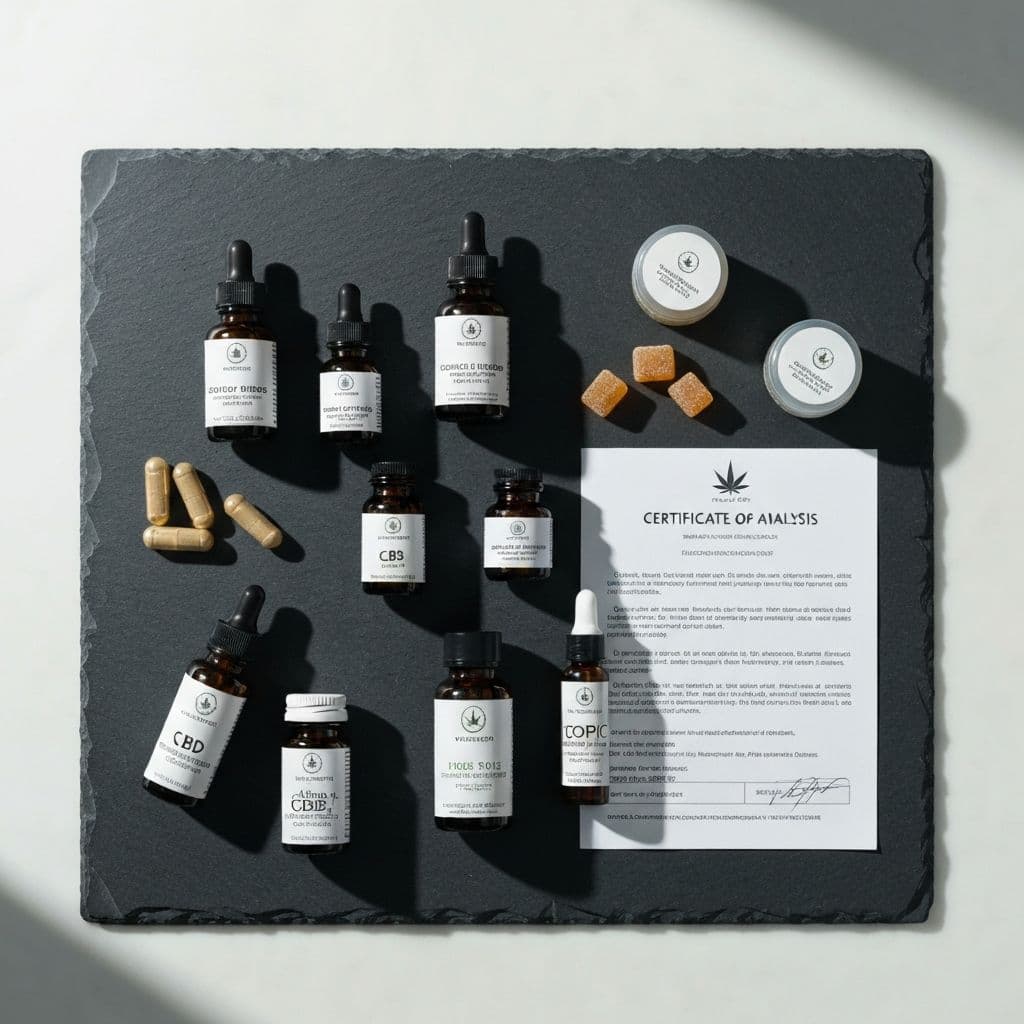
The single most important criterion for evaluating any CBD product is the availability of a current third-party certificate of analysis (COA) from an accredited laboratory.
A complete COA should include:
- Potency panel — CBD, THC, and ideally CBC, CBG, CBN levels, confirming the product contains what it claims
- Pesticide panel — hemp absorbs soil contaminants readily; pesticide testing is essential
- Heavy metals panel — arsenic, cadmium, lead, and mercury at minimum
- Residual solvents panel — for products extracted with chemical solvents
- Microbial panel — mold, yeast, E. coli, Salmonella
- Test date ��� should be within 12 months; reject products with outdated COAs
- Accredited laboratory — ISO 17025-accredited labs provide the highest standard of analytical reliability
If a company does not provide a COA or makes it difficult to find, do not purchase from them. Full stop.
Hemp Sourcing and Farming Practices
Hemp (Cannabis sativa L.) is a bioaccumulator — it absorbs compounds from the soil, including both nutrients and contaminants. This makes sourcing critically important.
- USA-grown hemp — subject to USDA oversight and state agricultural programs; generally higher quality standards than imports
- EU-grown hemp — strong organic agricultural regulations; good quality but shipping distances can affect freshness
- Organic certification — reduces pesticide and herbicide contamination risk
- Avoid: products with vague "imported hemp" sourcing, hemp grown in unregulated agricultural environments
Extraction Method
How CBD is extracted from hemp significantly impacts product quality and purity:
- CO2 extraction — the gold standard. Uses pressurized carbon dioxide to extract cannabinoids and terpenes without solvent residues. Produces clean, full-spectrum extracts that preserve the complete terpene profile. More expensive but produces superior products.
- Ethanol extraction — acceptable when done properly with food-grade ethanol; requires careful residual solvent testing
- Hydrocarbon extraction (butane/propane) — common in the cannabis industry; requires particularly thorough residual solvent testing
- Avoid cheap alternatives: olive oil extraction and similar methods produce unstable, low-concentration extracts unsuitable for commercial products
CBD Concentration and Value
One of the most common consumer mistakes is comparing CBD products by price without normalizing for CBD content. The correct metric is cost per milligram of CBD.
Typical market pricing:
- Budget range: $0.05–$0.08 per mg CBD (often lower quality)
- Mid-range: $0.08–$0.15 per mg CBD (generally acceptable quality)
- Premium range: $0.15–$0.25 per mg CBD (typically high-quality sourcing and extraction)
A 30ml bottle labeled "1000mg CBD" at $60 costs $0.06/mg — potentially suspicious pricing for high-quality CBD. A 30ml bottle at $90 costs $0.09/mg — more realistic for quality product. Calculate this ratio for every product you consider.
Product Formats: Matching Format to Goal
Different formats have different bioavailability and onset profiles that matter for efficacy:
- Sublingual tinctures — 20–35% bioavailability; onset 15–45 minutes; duration 4–6 hours. Best for acute anxiety, quick onset needs.
- Capsules/softgels — 6–15% bioavailability (improved with lipid-based formulations); onset 1–2 hours; duration 6–8 hours. Best for consistent daily dosing.
- Edibles/gummies — similar to capsules; variable bioavailability depending on fat content; convenient and palatable. Often underdosed — check mg per gummy carefully.
- Topicals — minimal systemic absorption; high local concentration. Best for localized pain, inflammation, skin conditions.
- Vapes — highest bioavailability (50–60%); fastest onset (minutes); shortest duration (1–3 hours). Concerns about lung health and vape additive safety warrant caution.
- Water-soluble/nanoemulsion CBD — emerging technology using nano-particle emulsification to dramatically improve bioavailability (up to 4x tincture); promising but verify claims with COA documentation.
"The most expensive CBD product is the one that does not work because of poor quality control. Investing in a verified, well-sourced product is always more economical than cycling through cheap products looking for one that delivers results."
Red Flags to Avoid
- No COA or outdated COA
- Claims to cure or treat specific diseases (legally prohibited and scientifically unsupported for most claims)
- Suspiciously low pricing (under $0.04/mg CBD)
- No information on hemp sourcing
- Proprietary blend labels that obscure exact CBD content
- No physical address or customer service contact
- Website testimonials that sound like pharmaceutical drug advertisements
Reputable Industry Indicators
- US Hemp Authority certification
- NSF or USP certification (rare but the gold standard)
- Membership in industry organizations with GMP requirements
- Transparent supply chain with farm-to-product traceability
- Published clinical research on their specific products
Conclusion
Buying CBD intelligently requires treating it like a pharmaceutical rather than a food product. Demand the COA, verify the sourcing, understand the extraction method, calculate cost per milligram, and match the format to your specific therapeutic goal. The CBD market rewards informed consumers — once you know what to look for, identifying quality products becomes straightforward and the therapeutic results follow.