Why the Extract Type Matters
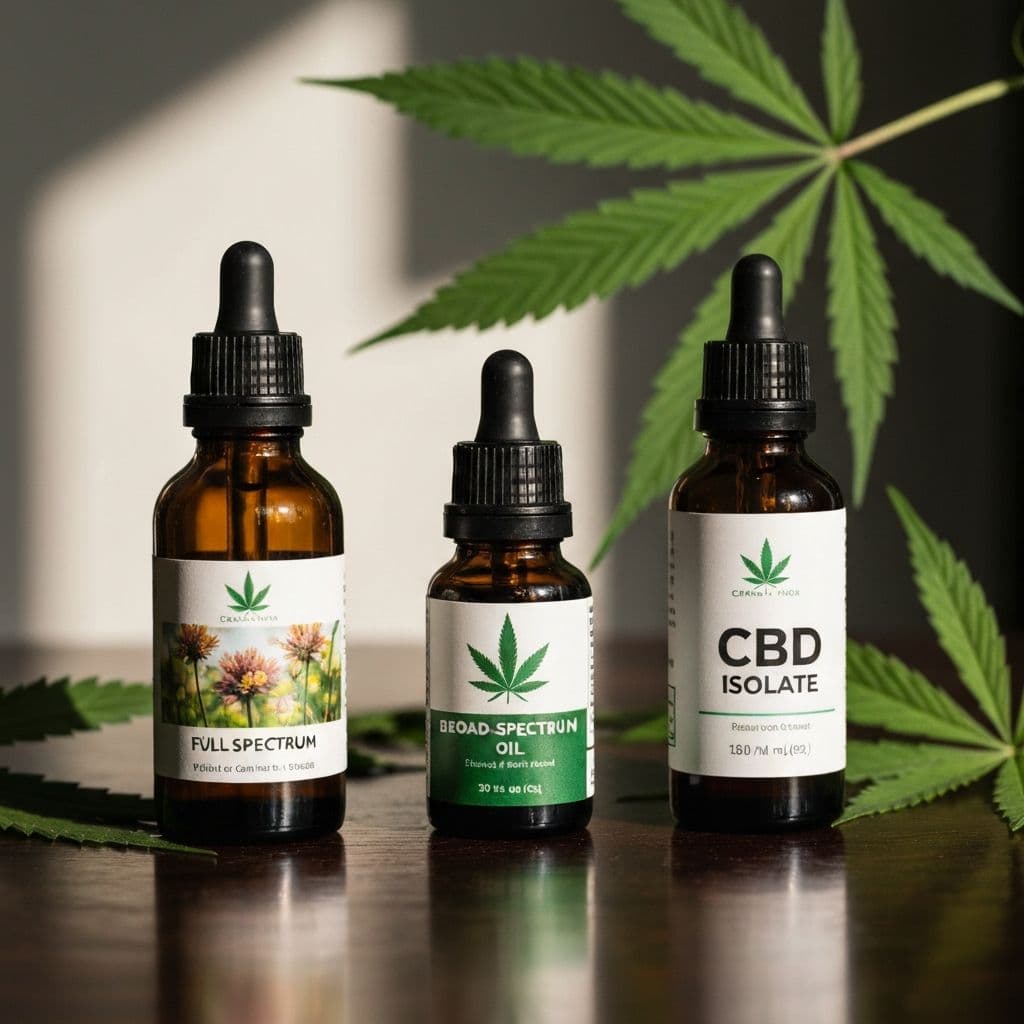
Walk into any CBD retailer and you will find three types of extract labeling: full-spectrum, broad-spectrum, and isolate. Many consumers treat these as interchangeable marketing terms. They are not. The type of extract fundamentally affects the product's mechanism of action, efficacy profile, and suitability for different users.
Full-Spectrum CBD
Full-spectrum CBD extract retains the complete profile of compounds naturally present in the hemp plant: cannabidiol (CBD) as the dominant compound, but also CBC, CBG, CBN, trace amounts of THC (legally up to 0.3%), terpenes, flavonoids, and plant sterols.
The Entourage Effect Advantage
The central argument for full-spectrum is the "entourage effect" — a concept first articulated by Israeli researcher Dr. Raphael Mechoulam, one of the founding figures of cannabinoid science. The hypothesis holds that cannabis compounds work synergistically, producing effects greater than the sum of individual parts.
Evidence supporting the entourage effect includes:
- A 2015 study published in Pharmacology & Pharmacy found that full-spectrum cannabis extract produced superior dose-response curves for inflammation compared to CBD isolate, with fewer side effects
- Specific terpenes (myrcene, linalool, beta-caryophyllene) have demonstrated independent therapeutic effects that complement CBD's mechanisms
- Minor cannabinoids CBG and CBC have anti-inflammatory and analgesic properties that likely contribute to the overall therapeutic effect
Who Full-Spectrum Is Best For
- Individuals not subject to drug testing
- Those seeking maximum therapeutic benefit for pain, anxiety, or inflammation
- People who have tried CBD isolate without success
Broad-Spectrum CBD
Broad-spectrum extract starts with full-spectrum oil and then undergoes additional processing to remove THC while retaining other cannabinoids and terpenes. It offers a middle ground: the entourage effect benefits of a multi-compound extract, without the THC that concerns some users.
Limitations of Broad-Spectrum
The additional processing required to remove THC can diminish other compounds as well. Terpenes — volatile aromatic compounds particularly susceptible to heat and processing — may be partially degraded. Some broad-spectrum products are essentially CBD isolate with terpenes added back in, which is not the same as a naturally preserved multi-compound extract.
When evaluating broad-spectrum products, look for a third-party certificate of analysis (COA) that shows the presence of multiple cannabinoids beyond CBD and confirms THC is undetectable.
Who Broad-Spectrum Is Best For
- Individuals subject to workplace drug testing
- Those with THC sensitivity or who prefer to avoid all THC
- People who want more than CBD isolate but need guaranteed THC-free status
CBD Isolate
CBD isolate is the purest form of CBD: 99%+ pure cannabidiol with all other plant compounds removed. It is a white crystalline powder that is odorless and tasteless.
The Case for Isolate
- Absolutely zero THC — the safest choice for drug-tested individuals
- Tasteless and odorless — easy to add to any food or beverage
- Precise dosing — exact milligram amounts with no other variables
- Useful for pharmaceutical research requiring standardized, isolated compounds
The Case Against Isolate
The primary argument against isolate is the evidence that it is less effective than full-spectrum in head-to-head comparisons. The entourage effect research suggests that CBD in isolation does not perform as well therapeutically as CBD alongside its natural plant companions.
Additionally, isolate follows a narrower bell-curve dose-response: the therapeutic window is smaller, meaning finding the optimal dose is more difficult and the margin for error (both underdosing and overdosing) is tighter.
"The cannabis plant spent millions of years evolving these compounds together. There is growing evidence that separating CBD from its natural matrix diminishes its therapeutic potential."
A Practical Decision Framework
Choose your extract type based on your specific situation:
- No drug testing + maximum efficacy needed → Full-spectrum
- Drug testing concern + want entourage benefits → Broad-spectrum (verify COA thoroughly)
- Drug testing + maximum THC certainty → CBD isolate
- Unknown or sensitive situation → CBD isolate is the safest default
Reading the Certificate of Analysis
Regardless of which type you choose, always request and review the third-party COA. Key things to verify:
- The CBD potency matches the label claim (within 10%)
- THC content is below your required threshold
- No pesticides, heavy metals, or residual solvents above safe limits
- Presence of claimed additional cannabinoids (for full and broad-spectrum)
- Test date is recent (within 12 months) and performed by an accredited laboratory
Conclusion
The extract type is not a minor marketing distinction — it fundamentally affects how a CBD product works. For most users without drug testing concerns, full-spectrum extracts offer the broadest therapeutic profile. For those who need THC-free certainty, broad-spectrum is the pragmatic middle ground. CBD isolate serves specific needs but should not be the default choice purely based on the assumption that "purer is better" — in this case, the natural complexity of the full plant appears to be an advantage, not a liability.