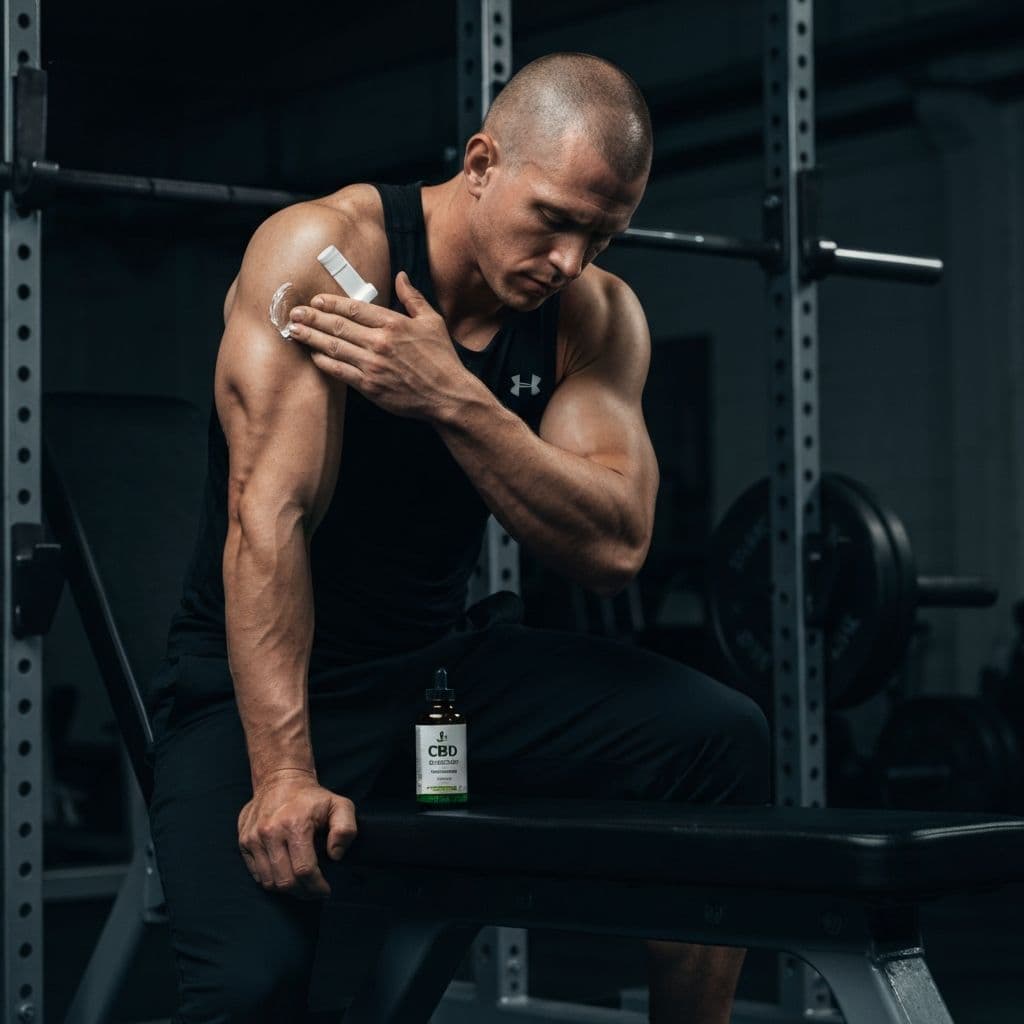
Why Athletes Are Turning to CBD
In 2018, the World Anti-Doping Agency (WADA) removed cannabidiol from its list of prohibited substances — a landmark decision that opened the door for professional and competitive athletes worldwide to use CBD without risking their careers. What followed was a rapid adoption of CBD across professional sports, from the NFL to the UFC to Olympic athletics.
The reasons are straightforward: elite athletes endure extraordinary physical stress, and recovery is as important as training. CBD addresses multiple pillars of athletic recovery simultaneously.
The Athletic Recovery Problem
High-performance training creates a cascade of physiological stressors:
- Inflammation — intense exercise triggers significant inflammatory responses in muscle tissue
- Oxidative stress — metabolic activity generates reactive oxygen species that damage cellular structures
- Sleep disruption — overtraining and competition anxiety impair sleep quality, slowing recovery
- Pain — acute injuries, chronic overuse conditions, and delayed onset muscle soreness are occupational realities for athletes
- Psychological stress — performance pressure, competition anxiety, and the mental burden of professional sport
CBD addresses each of these through well-documented mechanisms.
Anti-Inflammatory Effects for Faster Recovery
Exercise-induced inflammation is a normal and necessary part of adaptation — but excessive or prolonged inflammation slows recovery and increases injury risk. CBD's documented inhibition of pro-inflammatory cytokines (TNF-alpha, IL-1beta, IL-6) can help modulate the inflammatory response, accelerating recovery timelines without fully suppressing the beneficial adaptation signal the way NSAIDs do.
This distinction is critical: NSAIDs (ibuprofen, naproxen) blunt inflammation so completely that they may impair the very adaptations that make training productive. CBD's more nuanced modulation may represent a meaningful advantage — reducing excessive inflammation while preserving the adaptive response.
Pain Management Without Impairment
For athletes, the appeal of CBD for pain is threefold:
- No cognitive or motor impairment — unlike opioids or even high-dose NSAIDs
- No addiction potential — a critical concern given the opioid addiction rates seen in professional sports
- No banned substance status — WADA-compliant (for CBD; THC remains prohibited in-competition)
Research in both animal models and human subjects supports CBD's effectiveness for musculoskeletal pain, making it directly relevant for the strains, tendinopathies, and impact injuries common in athletic careers.
Sleep Quality: The Most Undervalued Recovery Tool
Performance research consistently shows that sleep is the most powerful recovery tool available to athletes. A single night of poor sleep reduces strength output, increases perceived exertion, impairs reaction time, elevates cortisol, and suppresses immune function.
For athletes who struggle with pre-competition anxiety or the sleep disruption that follows intense training sessions, CBD offers documented cortisol reduction and anxiolytic effects that can meaningfully improve sleep quality — without the morning grogginess that hampers early training sessions.
"I use CBD every night. It helps me wind down after training and actually sleep deeply. Recovery happens in sleep, so if you are not sleeping well, you are leaving recovery on the table." — Multiple professional athletes have reported similar experiences publicly.
Neuroprotection: A Long-Term Investment
For contact sport athletes — football, rugby, MMA, hockey — repetitive head impacts create cumulative neurological stress. CBD's neuroprotective properties, including its anti-neuroinflammatory effects and potential protection against excitotoxicity, have attracted interest as a long-term investment in neurological health. This is an active area of research with significant potential implications for contact sport athlete welfare.
The WADA Compliance Caveat
An important practical note: WADA removed CBD from the prohibited list, but all other cannabinoids — including THC — remain prohibited in-competition (THC is permitted out-of-competition under WADA rules but prohibited in-competition at a threshold of 150ng/mL in urine).
For competitive athletes, this creates a critical sourcing requirement: only CBD isolate or verified THC-free broad-spectrum products should be used, with third-party certificates of analysis confirming zero THC content. Full-spectrum products containing trace THC carry a risk of positive test results with regular high-dose use.
Practical Protocol for Athletes
- Post-training recovery: 25–50mg CBD via sublingual tincture within 30 minutes of training completion
- Sleep optimization: 50–100mg CBD capsule taken 1–2 hours before bed on heavy training days
- Topical application: High-concentration CBD balm applied directly to acute inflammation sites, sore muscles, or joints
- Pre-competition anxiety: 25–50mg CBD taken 1–2 hours before competition (ensure timing allows full processing before the in-competition period begins)
- Product choice: CBD isolate or verified THC-free broad-spectrum for competitive athletes
What CBD Cannot Do for Athletes
Honest assessment requires acknowledging what CBD does not do: it is not an ergogenic aid (performance enhancer). It does not increase strength, power output, VO2 max, or directly improve athletic performance metrics. Its value is entirely in the recovery and wellbeing domain — which, for high-performance athletes with demanding training loads, is enormously valuable even if less glamorous than direct performance enhancement.
Conclusion
CBD has earned its place in the high-performance athlete's recovery toolkit through a combination of regulatory clearance, scientific plausibility, and growing real-world adoption. Its multi-mechanism approach to recovery — addressing inflammation, pain, sleep, and stress simultaneously — makes it uniquely well-suited to the complex demands of athletic recovery. For competitive athletes, sourcing discipline is paramount: verify every product with third-party testing and stick to THC-free formulations.